Malleable Yet Unyielding
Vermat Toughened Glass transforms ordinary float glass into a high-strength safety barrier through controlled thermal treatment. By heating the glass to over 600°C and rapidly quenching it, we create permanent compressive surface stress that makes the glass four to five times stronger than its untreated counterpart. When broken, it disintegrates into small, blunt-edged granules — drastically reducing the risk of serious injury. Available as flat panels for windows, doors, and curtain walls, or as curved elements for architectural features, our toughened glass meets the most stringent international safety standards, providing strength, thermal resistance, and peace of mind in every application.
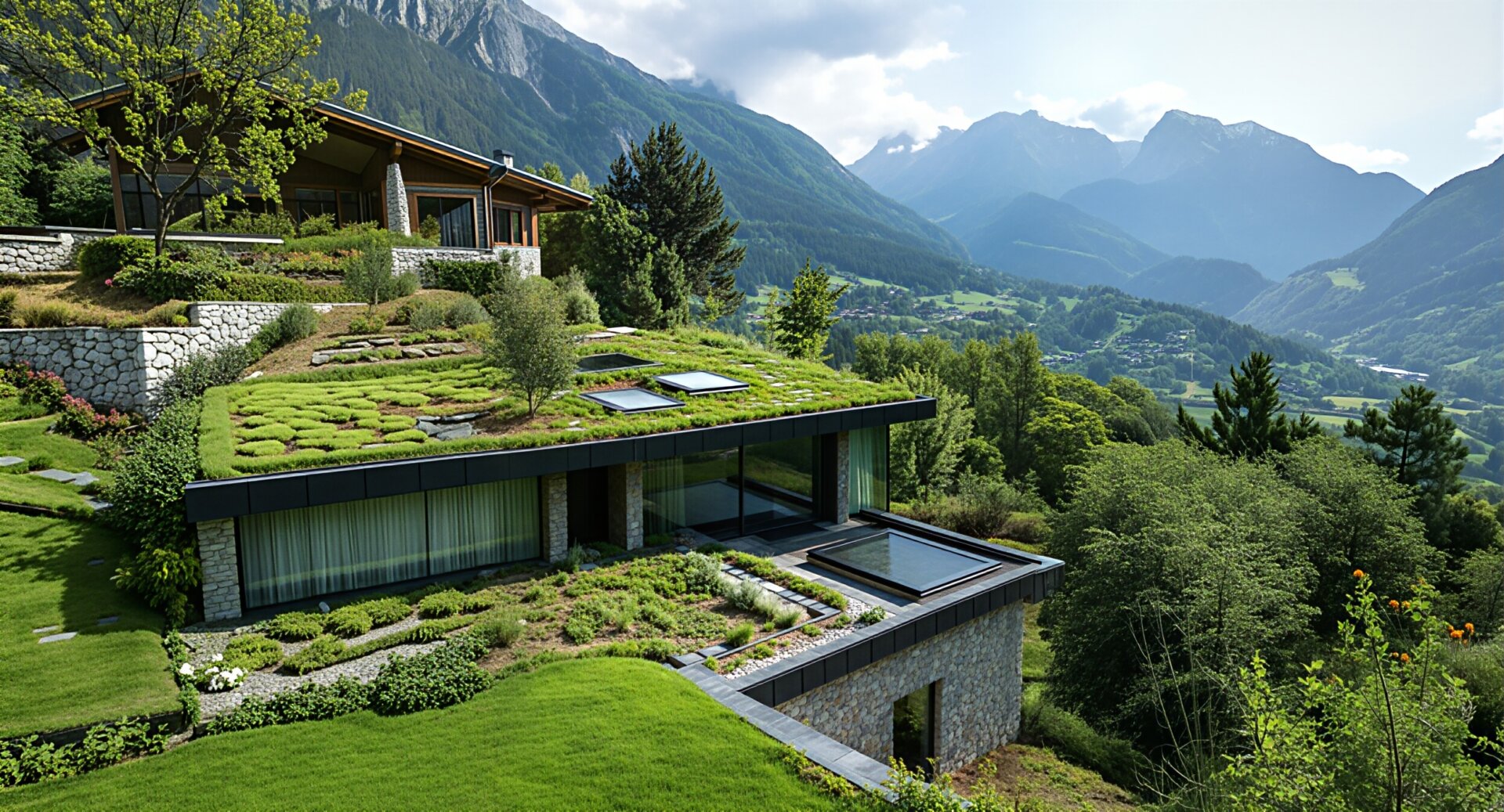
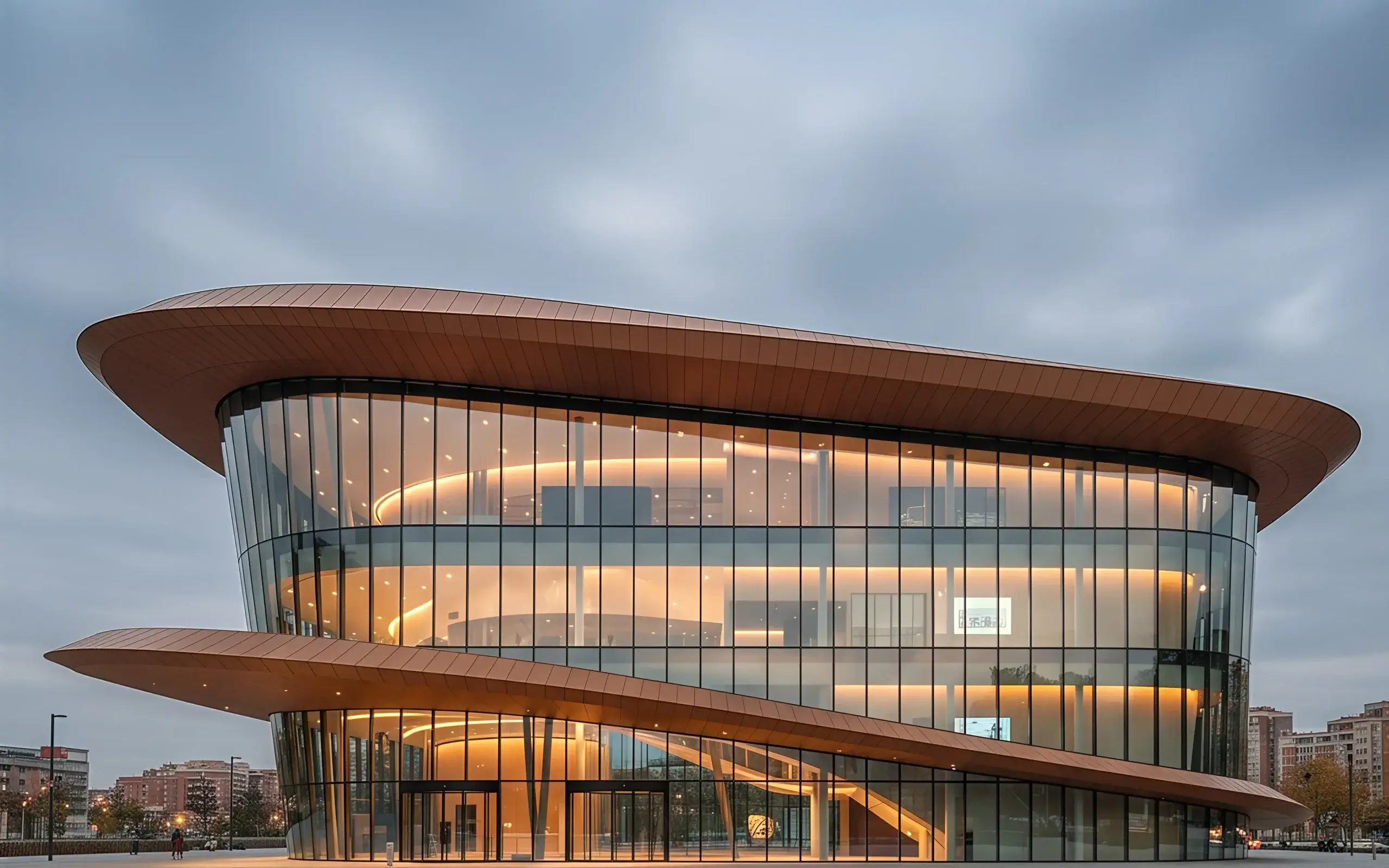
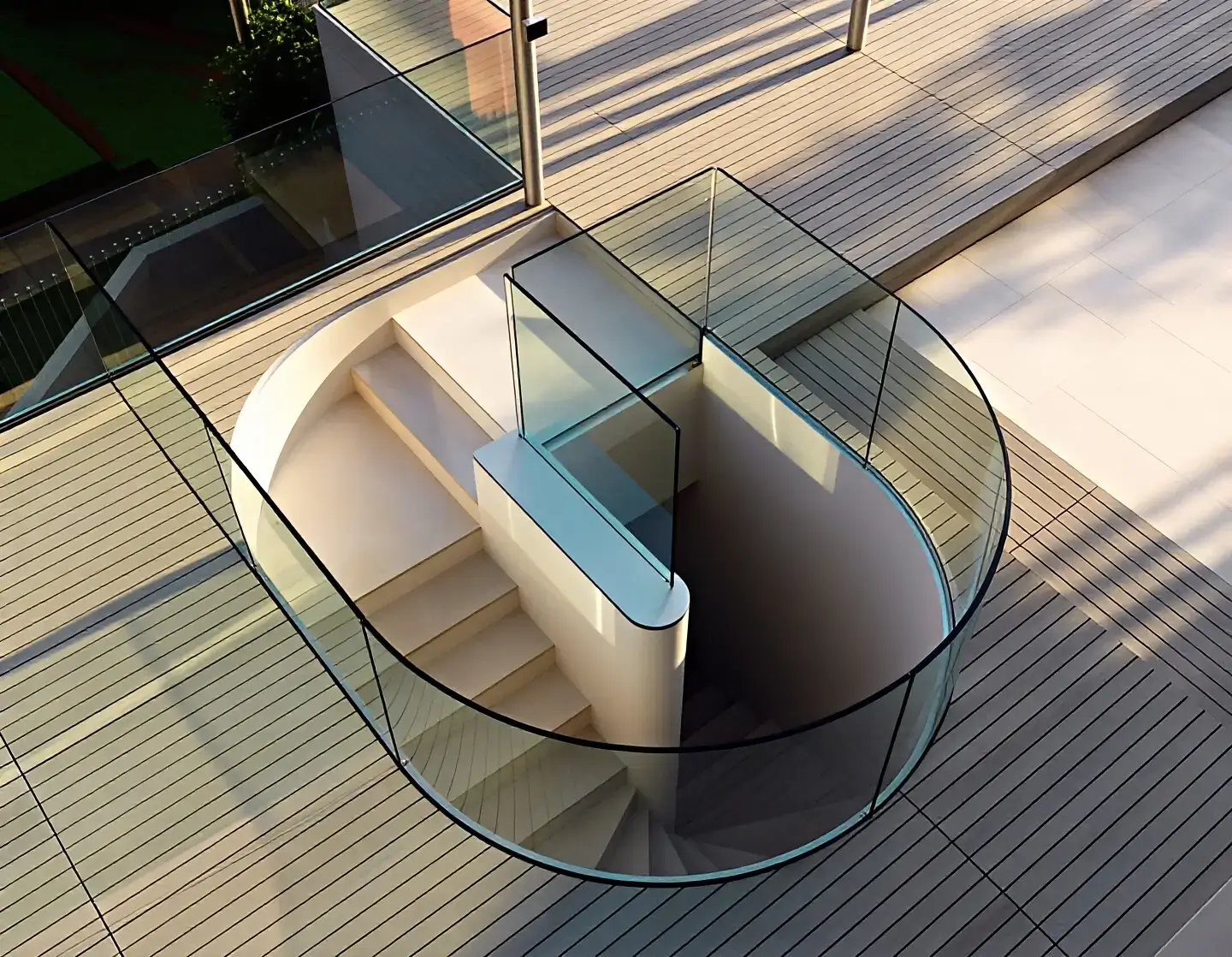
Flat tempered glass shields the everyday with resilient clarity: skyscraper curtain walls confronting storms, shower enclosures embracing misted warmth, furniture countertops bearing life’s textures. Curved tempered glass liberates form from flatness – automobile windows tracing the flow of wind, observatory domes capturing stellar radiance, appliance screens pulsing with technological glow, spiral stair railings frozen in melodic curves.
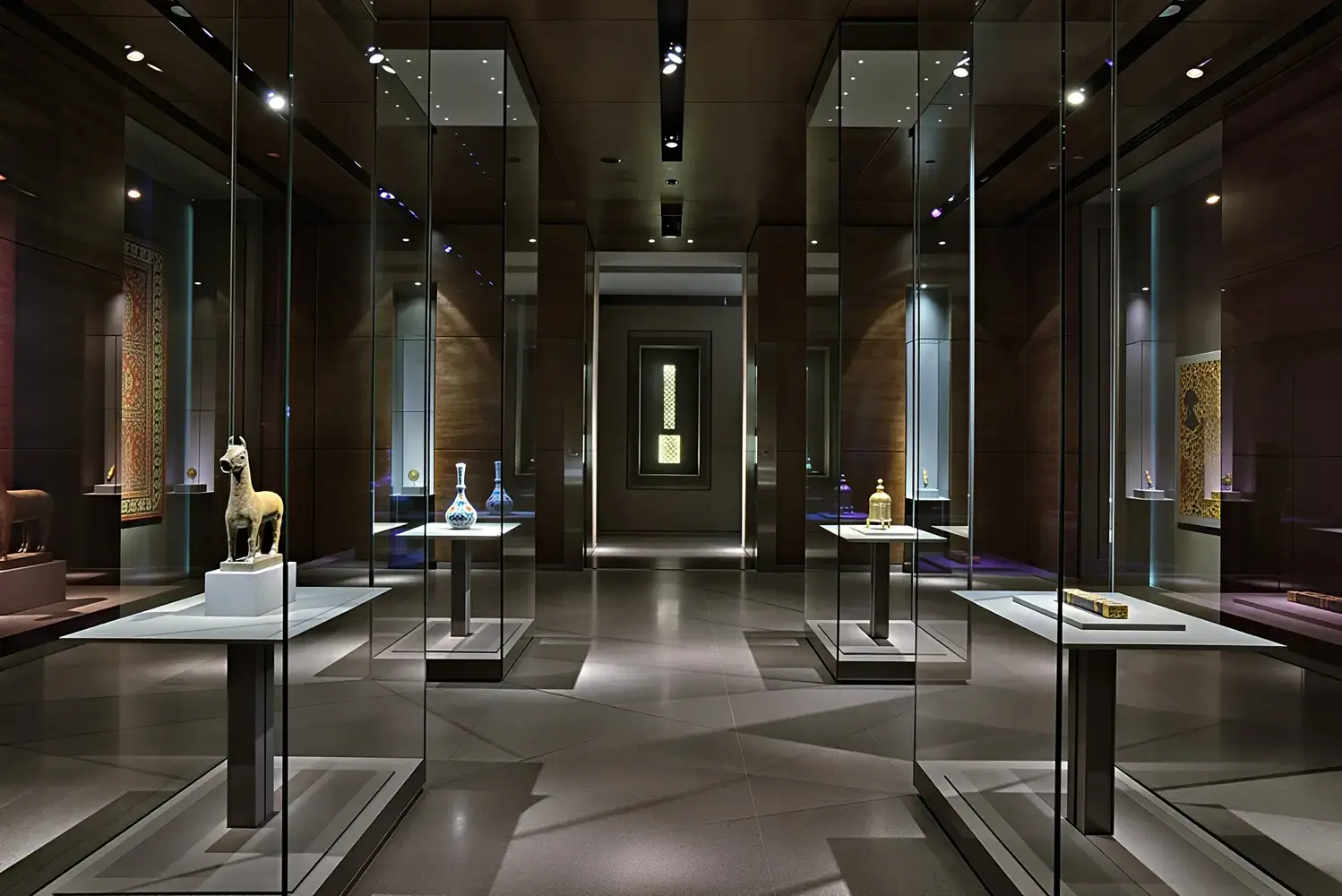
Where straight lines meet fluid arcs, safety transcends compliance to empower creation: skywalks where children dash above abysses, pedestrian bridges stitching urban skylines, museum vitrines suspending eternity. At the threshold of rigidity and grace, we transform transparency into fearless wonder.
Key Features & Customization

Superior Strength & Safety
With a bending strength exceeding 120 N/mm², Vermat toughened glass withstands high wind loads, thermal stress, and daily impacts. The distinctive fracture pattern — countless small, pebble-like fragments — ensures it qualifies as Class A safety glass under global codes.

Thermal Shock Resistance
Engineered to withstand sudden temperature variations of up to 200°C, our toughened glass is the mandatory choice for spandrels, oven doors, refrigeration displays, and building skins exposed to rapid heating and cooling cycles. It remains stable where ordinary glass would shatter.

Flat & Curved Tempering
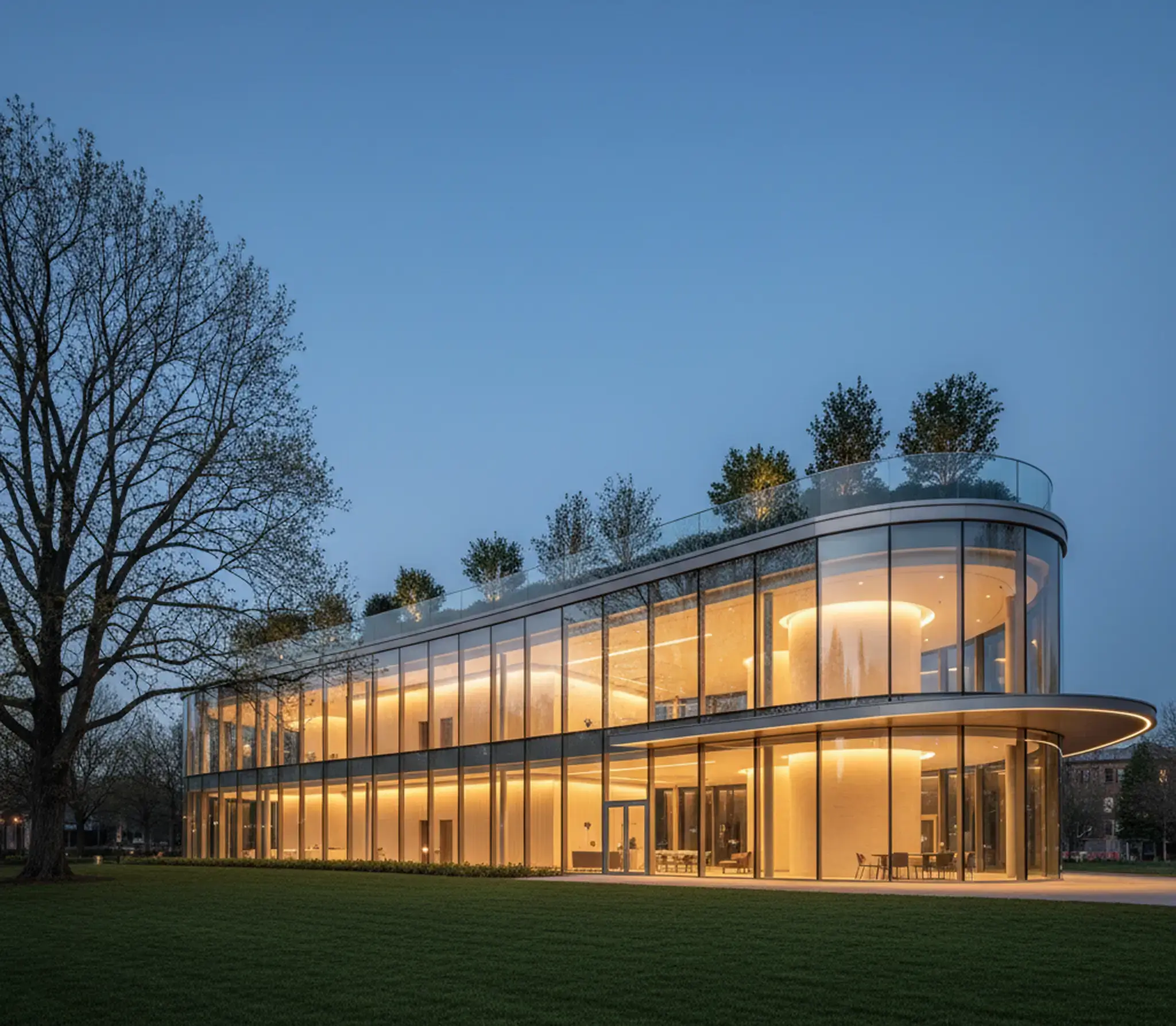
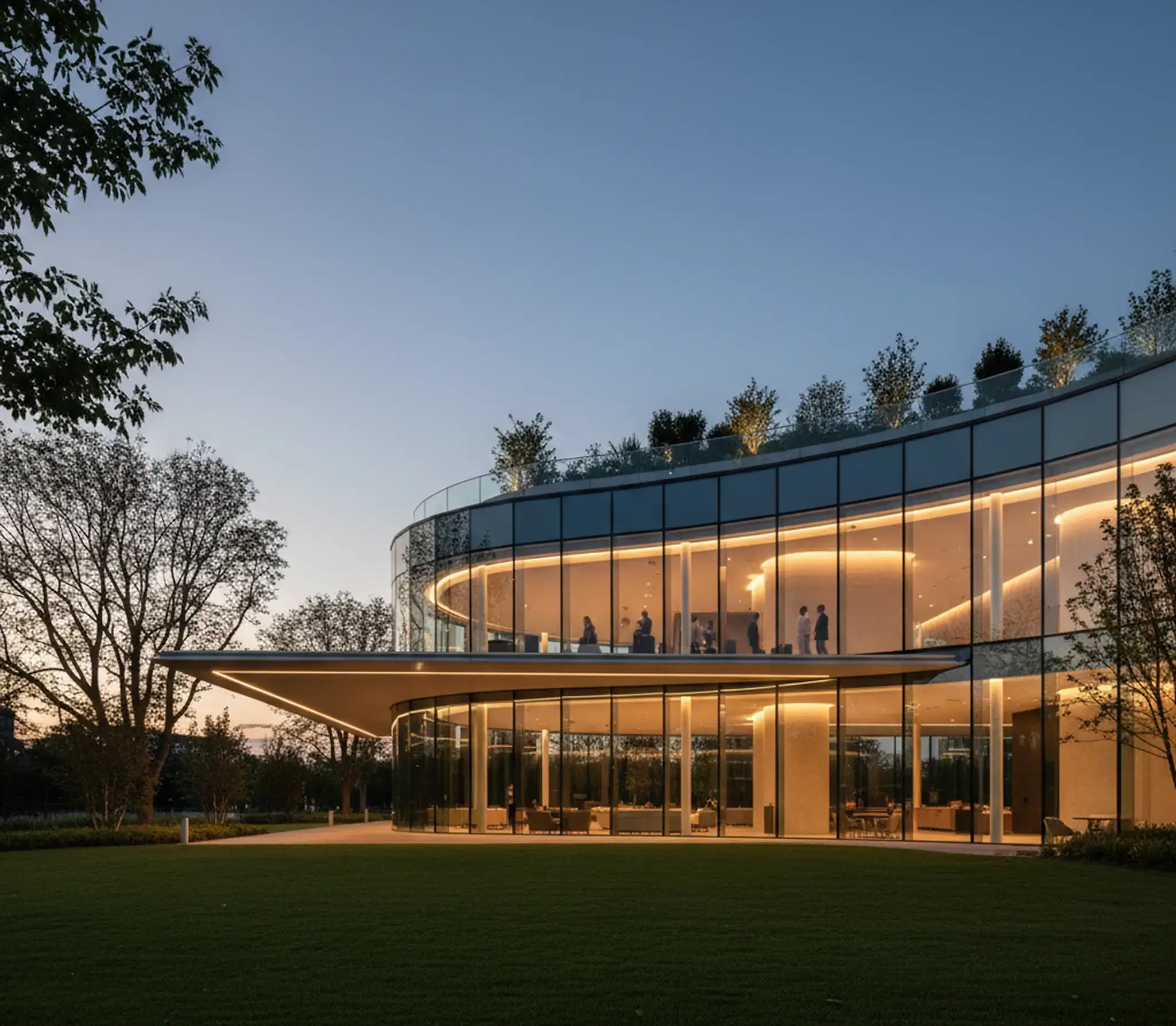
Flat panels up to 3300 × 8000 mm in sizes from 3 mm to 25 mm thickness serve the broadest construction needs. Curved and bent toughened glass, produced through combined hot bending and tempering, enables elegant arcs, cylindrical curtain walls, and free-form canopies — all with identical safety properties.

Complete Edge & Surface Processing
Before tempering, Vermat performs all required edge working — flat polish, arris, chamfer, and hole drilling — to your exact specifications. Post-tempering, we offer acid-etching for a silk-matte finish, digital printing for decorative layers, and integration of fixing components. No detail is too small.

HST for Spontaneous Breakage Prevention
For critical overhead and façade applications, Vermat offers Heat Soak Testing (HST) in accordance with EN 14179. This process thermally induces the fracture of panels containing unstable nickel sulfide inclusions, eliminating the risk of spontaneous breakage in service and ensuring absolute safety in public spaces.
Performance & Durability
- Flexural Strength: ≥120 N/mm² (EN 1288) — 4–5 times stronger than annealed glass
- Thermal Shock Resistance: ΔT up to 200°C (EN 12150-1)
- Safety Classification: Class A safety glass per EN 12600 and GB 15763.2
- Fragmentation: Small, blunt-edged granules — no dagger-like shards
- Durability: Unaffected by UV, humidity, and normal atmospheric corrosion
- Customizability: Holes, notches, cutouts, and edge profiling available prior to tempering
Applications
- Curtain walls and structural façades
- Windows and sliding doors in high-rise buildings
- Frameless glass doors and shopfronts
- Balustrades, railings, and glass fin supports
- Skylights, canopies, and overhead glazing (with HST)
- Shower enclosures and bathroom partitions
- Refrigeration and catering equipment
- Furniture, shelves, and interior partitions
- Automotive and marine glazing (specialized range)




Technical Specifications
| Thickness Range | 2.5 mm – 25 mm (standard); up to 19 mm for curved |
| Min. Size | 300 × 300 mm |
| Max. Flat Panel Size | 3300 × 13000 mm |
| Max. Curved Panel Size | 2400 × 4000 mm (depending on radius) |
| Minimum Radius | ~200 mm for 5 mm thickness, increasing with thickness |
| Edge Work | Flat polish, pencil edge, bevel, chamfer, mitre |
| Daily Capacity | 3000 sqm/day |
| Category | Tempered Glass / Ultra White Tempered Glass / Reflective Tempered Glass / Low-E Tempered Glass |
| Heat Soak Testing | Optional per EN 14179 |
| Quality Standards | EN 12150, GB 15763.2, ASTM C1048, ANSI Z97.1, AS/NZS 2208 |


Parameters
| Thickness mm | Minimum Radius mm | Maximum Arch Rise mm | Maximum Arc Length mm |
|---|---|---|---|
| 5 | 1000 | 684 | 2500 |
| 6 | 1200 | 594 | 2500 |
| 8 | 1500 | 491 | 2500 |
| 10 | 1800 | 416 | 2500 |
| 12 | 1800 | 416 | 2500 |
| 15 – 19 | 2000 | 378 | 2500 |
STC (Sound Transmission Class) is an internationally recognized metric for evaluating the airborne sound insulation performance of building components (e.g., glass, walls). Higher values indicate superior acoustic isolation.