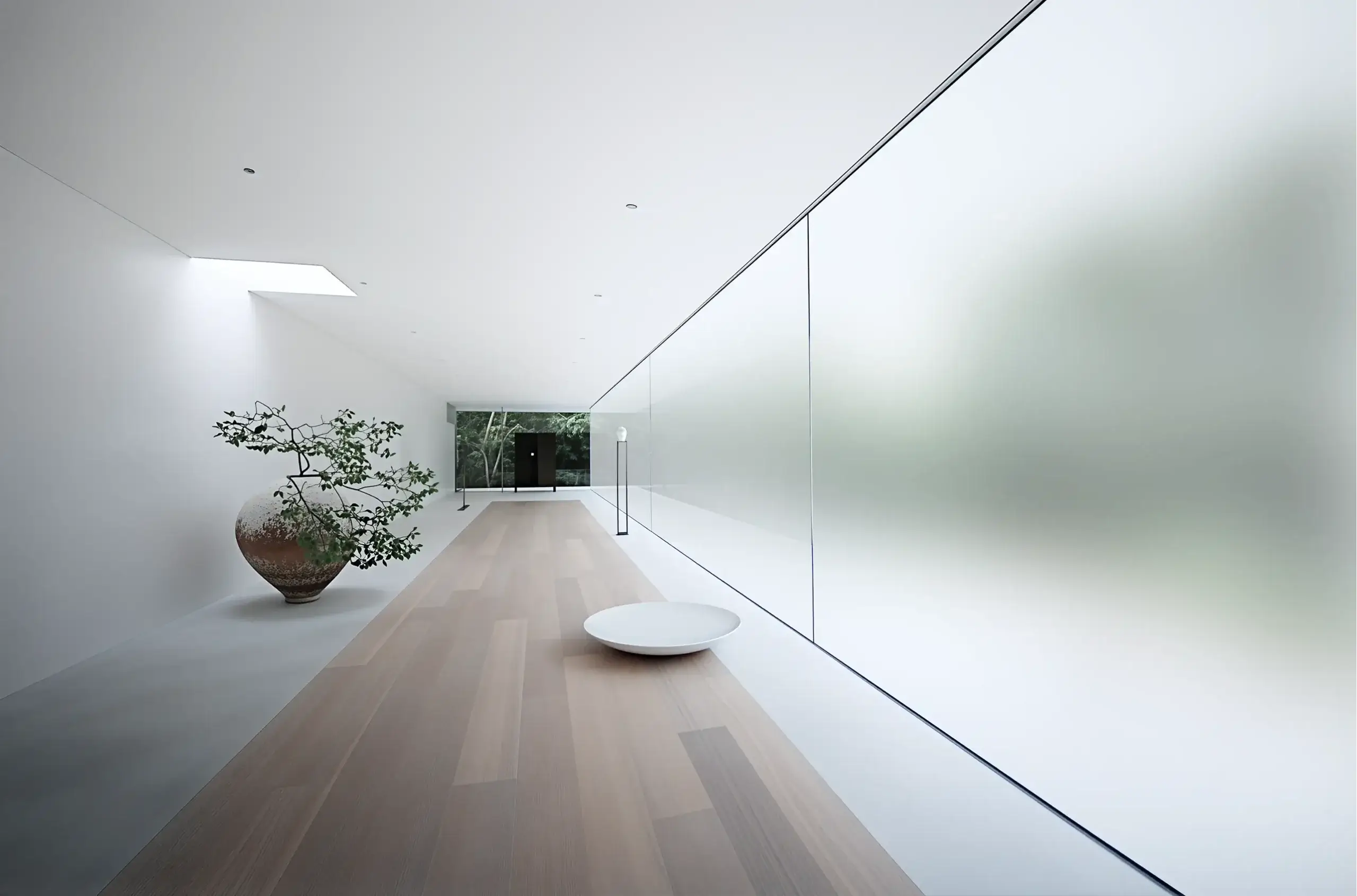
Transparent when you need it. Private when you don’t.
Vermat Smart Glass Systems redefine the relationship between space, light, and privacy. At their core lies a PDLC (Polymer Dispersed Liquid Crystal) film — a switchable interlayer laminated between two panes of high-quality glass. When the electrical current is on, the liquid crystal molecules align, and the glass becomes crystal clear. When the current is off, the molecules scatter, turning the glass milky and opaque within milliseconds. This instant, controllable transition eliminates the need for blinds, curtains, or physical partitions, providing a clean, minimalist aesthetic while delivering UV blocking, acoustic comfort, and optionally, projection capability. Available as flat or curved panels, and combinable with Low-E coatings for thermal insulation or integrated into double-glazed units (IGU), Vermat Smart Glass is the definitive solution for executive offices, healthcare privacy, luxury residential, hospitality, and beyond.
Key Features & Customization

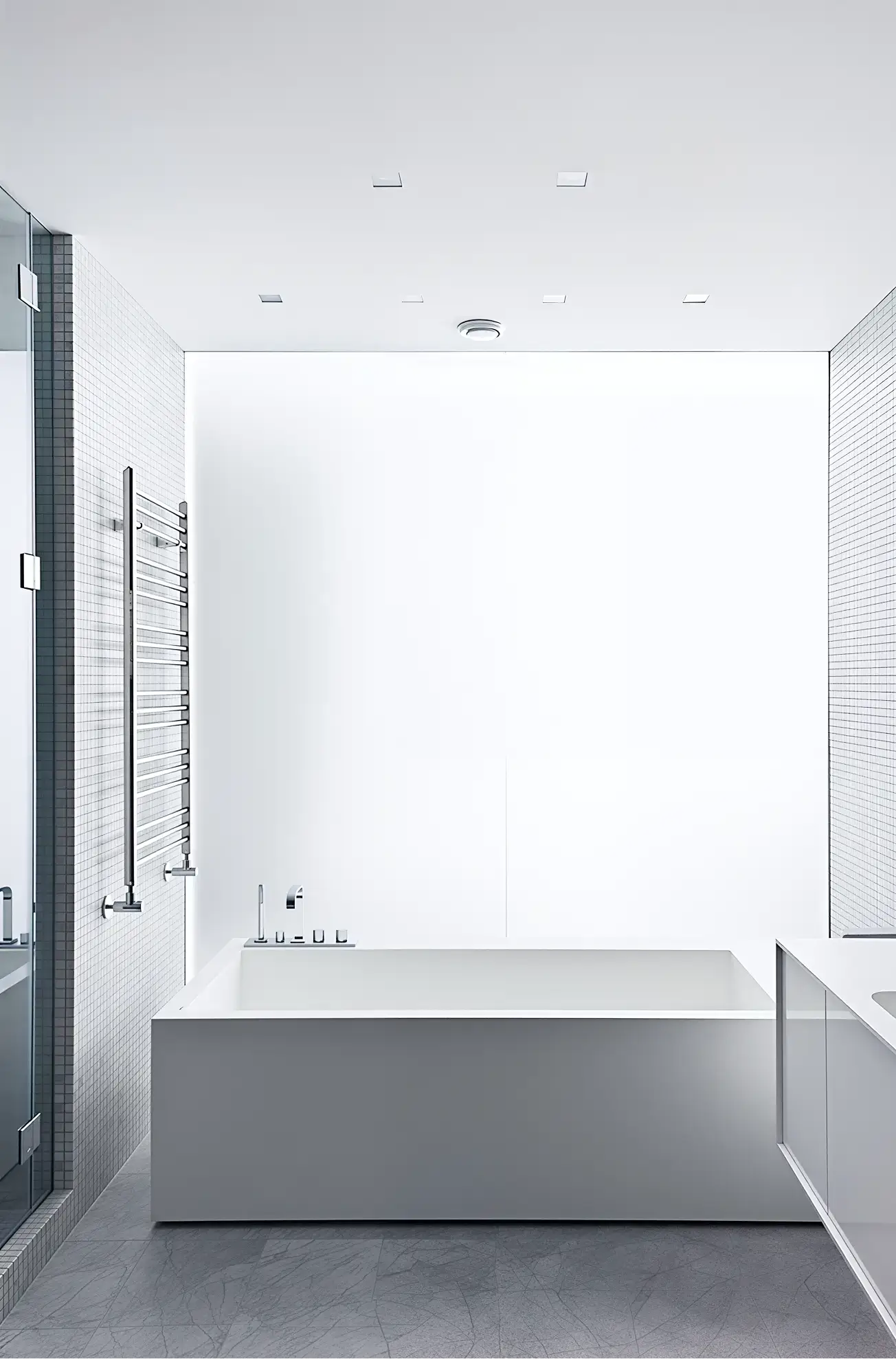
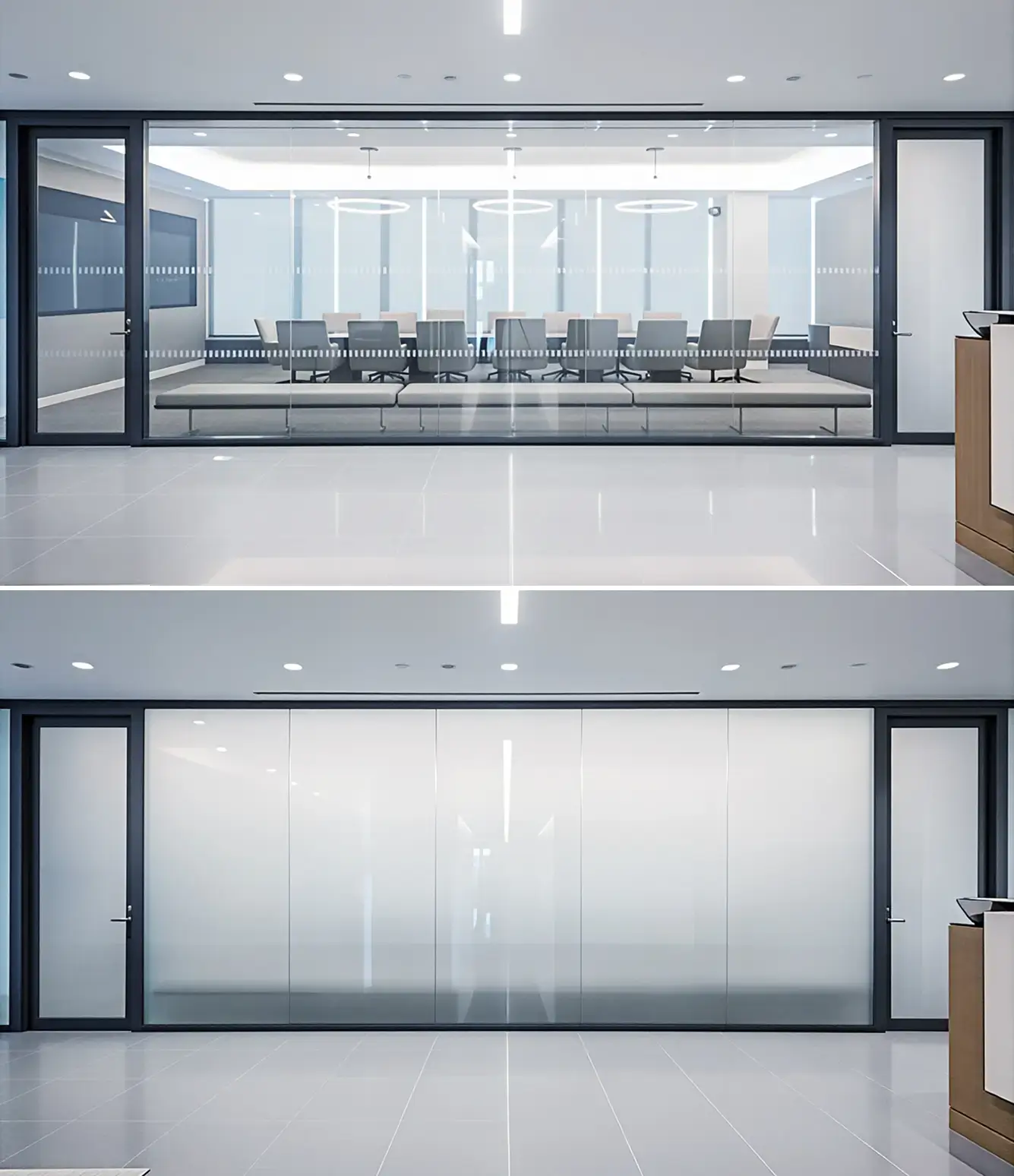
Instant Privacy On Demand
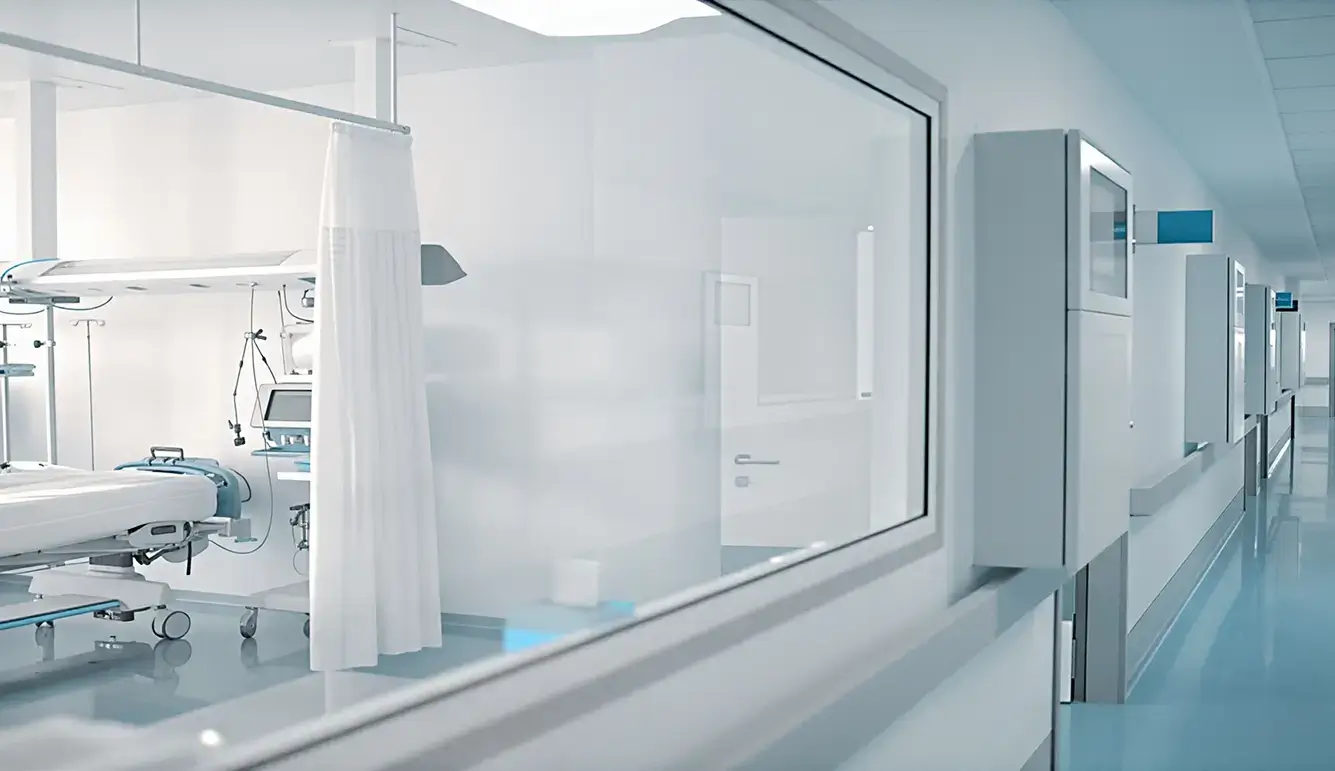
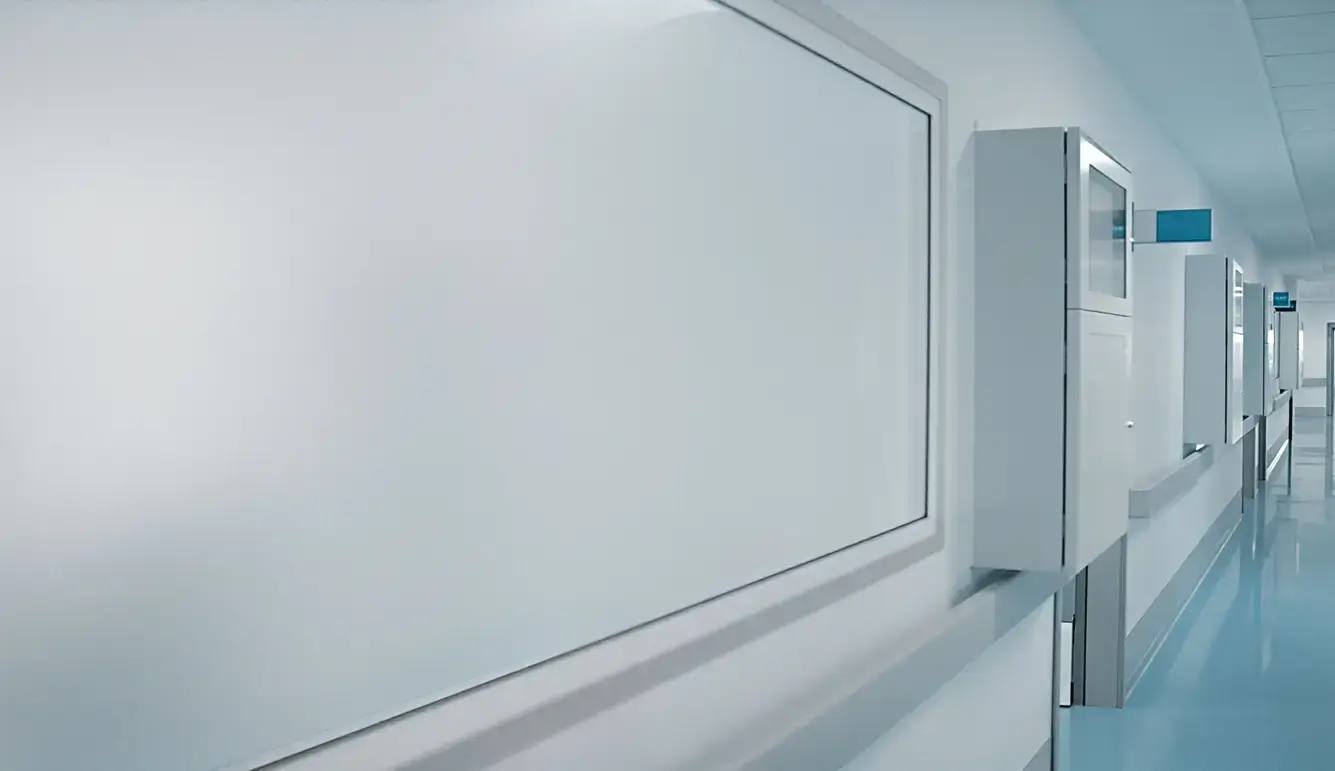
From transparent to opaque in milliseconds, Vermat Smart Glass provides visual privacy without the need for mechanical blinds or drapery. It is ideal for glass-walled meeting rooms, patient observation windows, bathroom enclosures, and residential façades where controlling visibility is critical.

Projection-Ready Surfaces
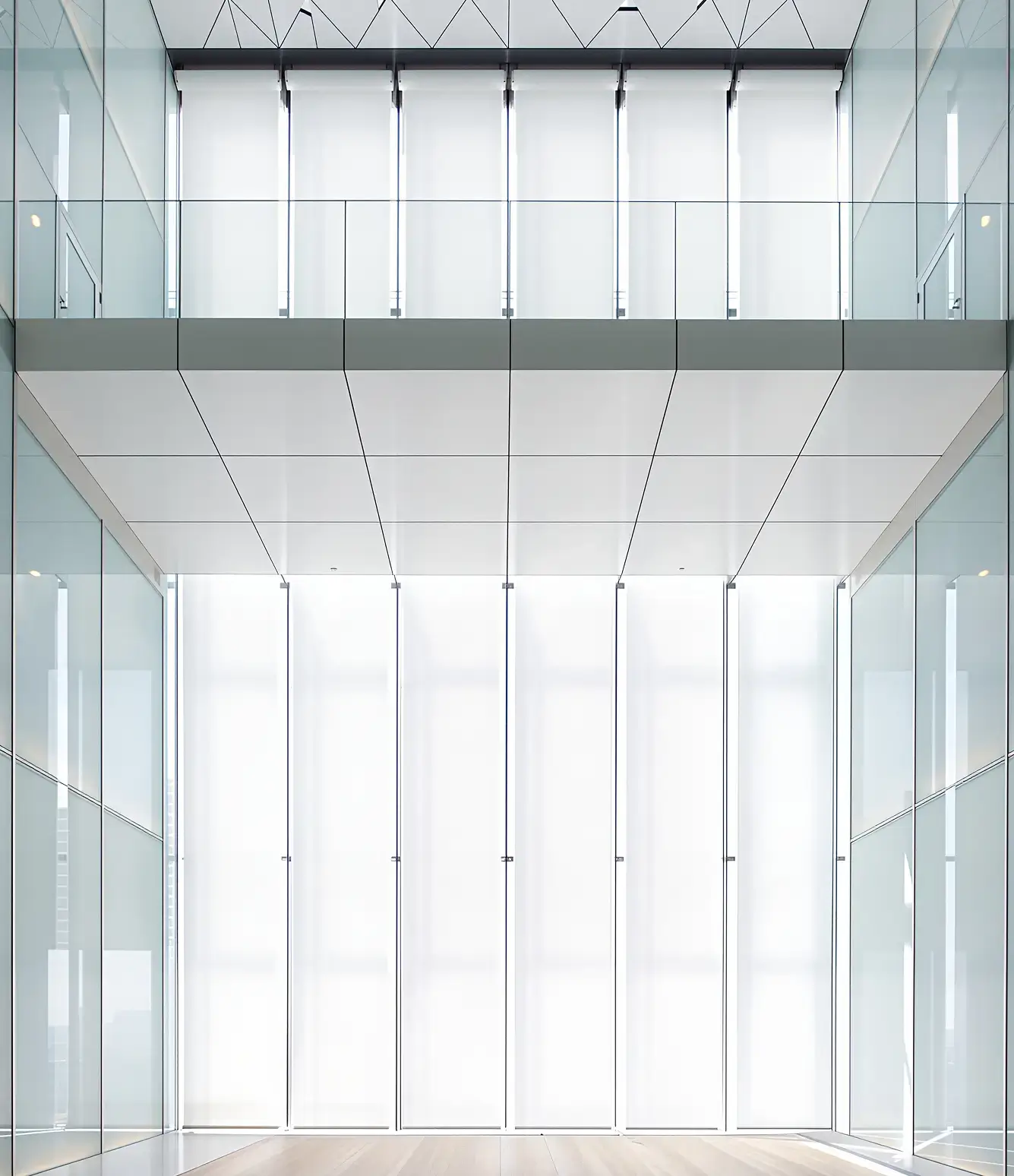
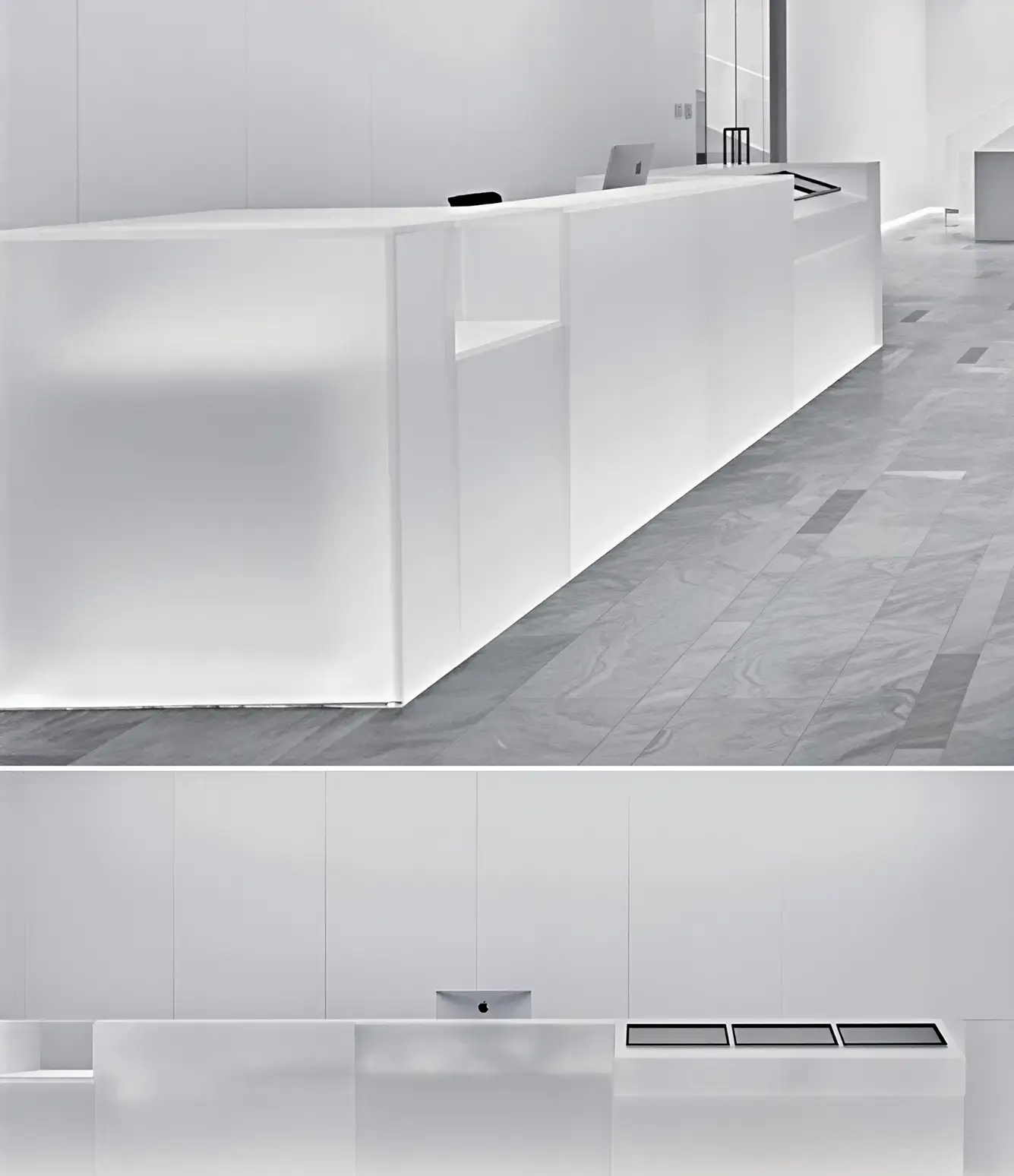
In its opaque state, the glass becomes a high-contrast, bright-white projection screen. This dual functionality transforms partitions in corporate boardrooms, educational spaces, and retail storefronts into dynamic presentation canvases without the need for drop-down screens.

PDLC Laminated Construction
The switchable PDLC film is laminated between two glass panes using EVA or PVB interlayers, ensuring safety compliance — even when broken, glass fragments remain bonded. The construction provides inherent sound insulation and blocks up to 99% of UV radiation, protecting furnishings and occupants.

Custom Shapes, Edges & Finishes
Vermat supplies PDLC glass in flat and curved forms, with custom cutouts for switches, electrical outlets, and access control readers. Edge work options include flat polish, bevel, and mitre. Glass can be tinted, acid-etched, or digitally printed to achieve specific aesthetic or privacy effects in both on and off states.

Integration into IGUs
For exterior applications, PDLC glass can be combined with a second or third pane and Low-E coatings to form a smart Insulated Glass Unit. This configuration simultaneously delivers switchable privacy, thermal insulation, and solar control, making it suitable for building envelopes in offices, clinics, and high-end retail.

Control & Automation
Each panel is operated by a low-voltage electrical supply (typically 48–65V AC) and can be controlled individually, in zones, or building-wide via wall switches, remote controls, touch panels, or fully integrated building management systems (BMS). Integration with occupancy sensors enables fully automated privacy and energy-saving modes.
Performance & Durability
- Switching Speed: < 10 milliseconds from clear to opaque; instant visual response
- UV Blocking: Up to 99% UV filtration in both clear and opaque states
- Power Consumption: < 5 W per sqm in transparent state; near zero in opaque state
- Acoustic Performance: Rw up to 38 dB, depending on glass configuration
- Haze Ratio: > 95% in opaque mode; < 3% in transparent mode
- Operating Voltage: 48V – 65V AC; transformer supplied
- Durability: > 10 million switch cycles tested; > 20-year projected service life
- Safety Compliance: Class A safety glass when laminated with PVB or EVA
Applications
- Corporate executive offices, boardrooms, and meeting pods
- Healthcare: ICU observation windows, operating theatre blinds, patient room dividers
- Luxury hospitality: spa partitions, bathroom enclosures, suite dividers
- High-end residential: sliding doors, façade glazing, walk-in wardrobe panels
- Retail flagship stores: dynamic storefront displays
- Banking and security: teller screens that switch for privacy
- Educational and cultural institutions: adaptable classroom and exhibition space
Technical Specifications
| Glass Types | Clear float, ultra-clear (low-iron), tinted, reflective, Low-E |
| Max. Panel Size | 1800 × 3500 mm (larger sizes available on request) |
| Min. Panel Size | 200 × 300 mm |
| Thickness Range | 8 mm – 40 mm (PDLC laminate) |
| Shape Options | Flat panels and cylindrical curves |
| Edge Work | Flat polish, pencil edge, bevel, chamfer, mitre, custom cutouts |
| Control Options | Wall switch, remote, app, BMS/KNX/Control4 integration |
| Power Supply | 48V – 65V AC transformer (included per panel or zone) |
| Compliance & Standards | CE, CCC, UL, EN 12543 (laminated), EN 12150 (toughened substrates), GB 15763.3 |


Parameters
| Type | Properties | On State | Off State |
|---|---|---|---|
| Optical Parameters | Parallel Light Transmission | > 82% | < 10% |
| Visible Light Transmission | > 82% | < 5% | |
| Visible Angle | 150° | — | |
| UV Blocking | ≥ 98% | ≥ 98% | |
| Fog Degree | < 7% | > 95% | |
| Electrical Properties | Operating Voltage | 60V AC | — |
| Frequency | 50 – 60Hz | — | |
| Current | 2 mA/sqm | — | |
| Power Consumption | < 5 W/sqm | < 5 W/sqm | |
| Switching Time | < 10 ms | < 200 ms |